
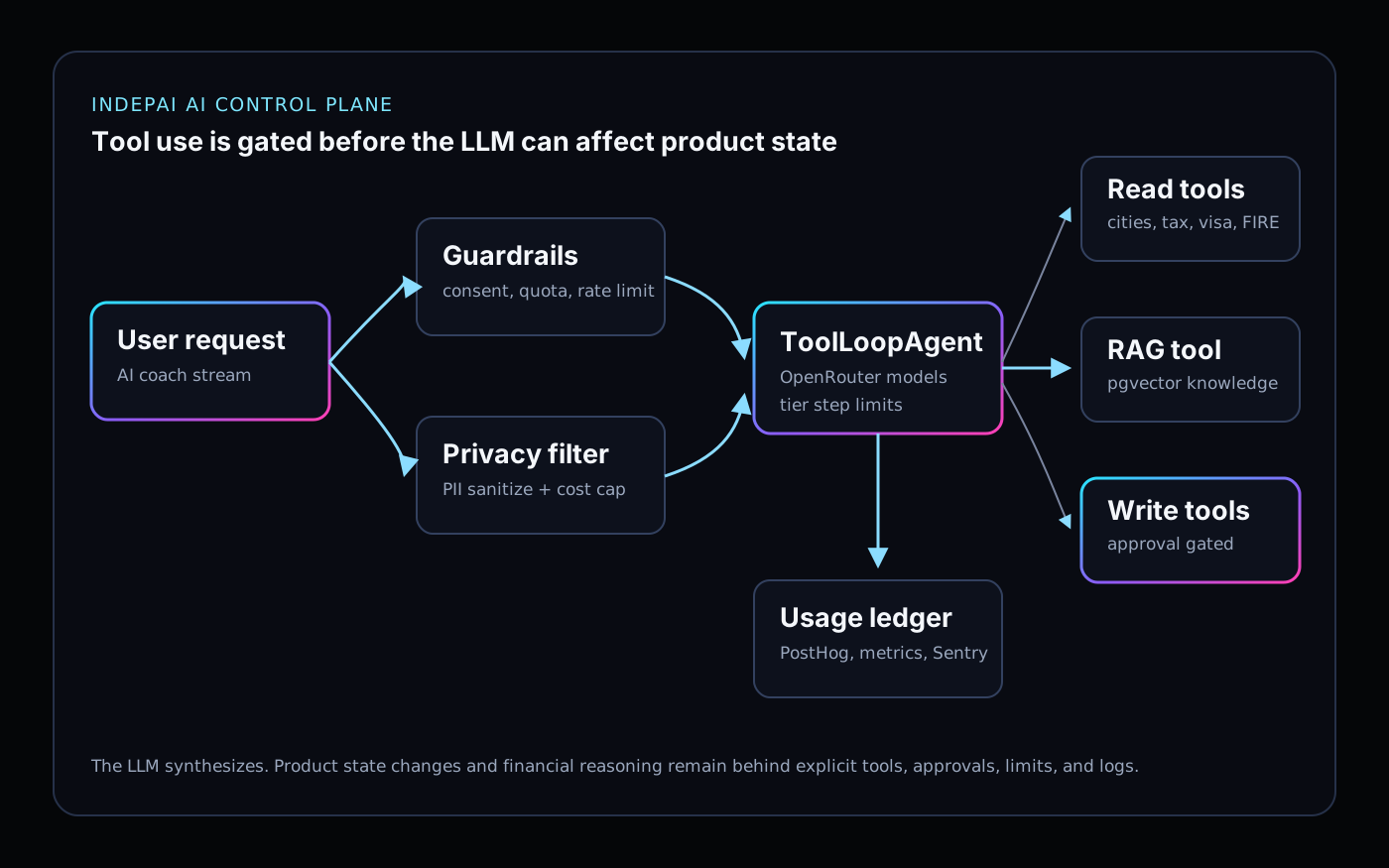
A financial AI coach should not behave like an open chat box with access to personal data. It needs an explicit contract: what it can read, what it can infer, what it can write, and when it must ask for permission.
IndepAI uses that boundary as a product principle. The coach can explain FIRE trade-offs, summarize city and portfolio context, and help users understand their next action. It should not invent a financial target, bypass deterministic calculations, or touch sensitive data outside an approved workflow.
Consent is the first gate. Users need to understand when AI features are active and what context they can use. That means consent toggles, clear product language, and backend checks that do not rely only on UI state.
Tool design is the second gate. A tool can read city costs, run FIRE math, retrieve approved knowledge, summarize a portfolio snapshot, or draft an explanation. Each tool should have a narrow input shape and a narrow output shape so the model cannot silently expand its authority.
Privacy is the third gate. PII handling, prompt construction, logging, and retrieval should be designed so the product can explain what data entered the AI path. A useful system can answer "what did the model see?" after the fact.
Cost and abuse limits are the fourth gate. AI coaching can become expensive or noisy without quotas, step limits, timeout behavior, and usage ledgers. A product team needs to know which users, features, prompts, and tools generate cost.
The result is not slower AI. It is more usable AI. When users can trust the boundary, AI becomes a helpful explanation layer around a deterministic product instead of a risky black box.