
KONTENEROContainer ordering in two minutes
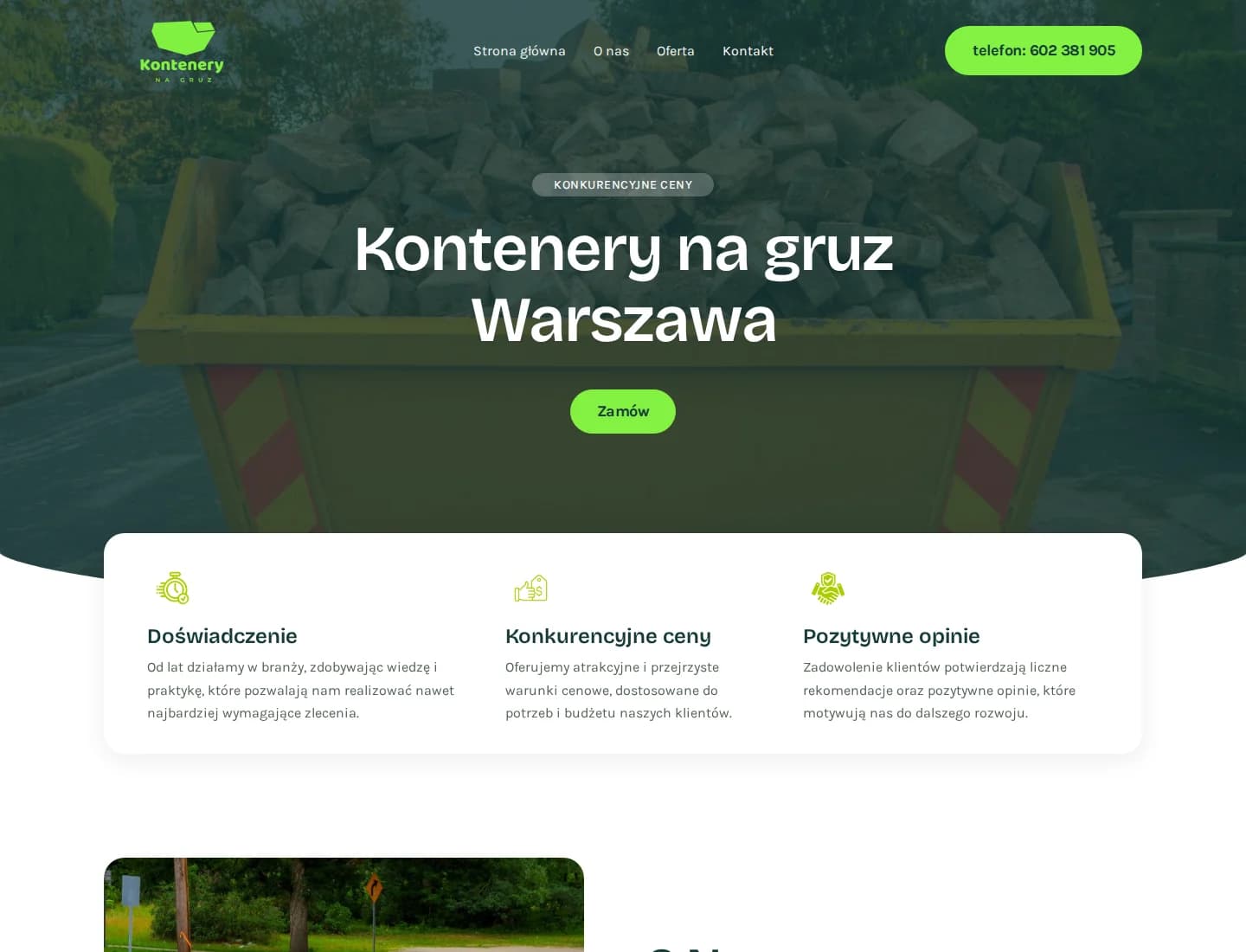
An in-progress marketplace for ordering rubble containers. The product collects address, waste type, volume, phone, and timing, then routes the request to verified local operators with active BDO numbers and fast callback expectations.
Running something like this yourself? Describe the process, and we send back a written process review within one business day, no call required. Get a process review
01 · Product shape
Kontenero is designed around a fast quote flow: describe the waste, pick timing, leave a callback number, and get offers from verified operators.
The page already contains the core trust model: BDO verification, active permits, operator cards, waste-type guidance, and expectations for response time.
02 · What remains
The public funnel is promising, but the product is still in progress. The next engineering work is operator onboarding, verified lead routing, pricing rules, CRM handoff, and measurement of callback quality.
We keep this case study honest: it is a CloudFloo product build underway, not a finished marketplace with proven liquidity yet.
How the system is actually put together.
Fast intake, validation, routing, and notification
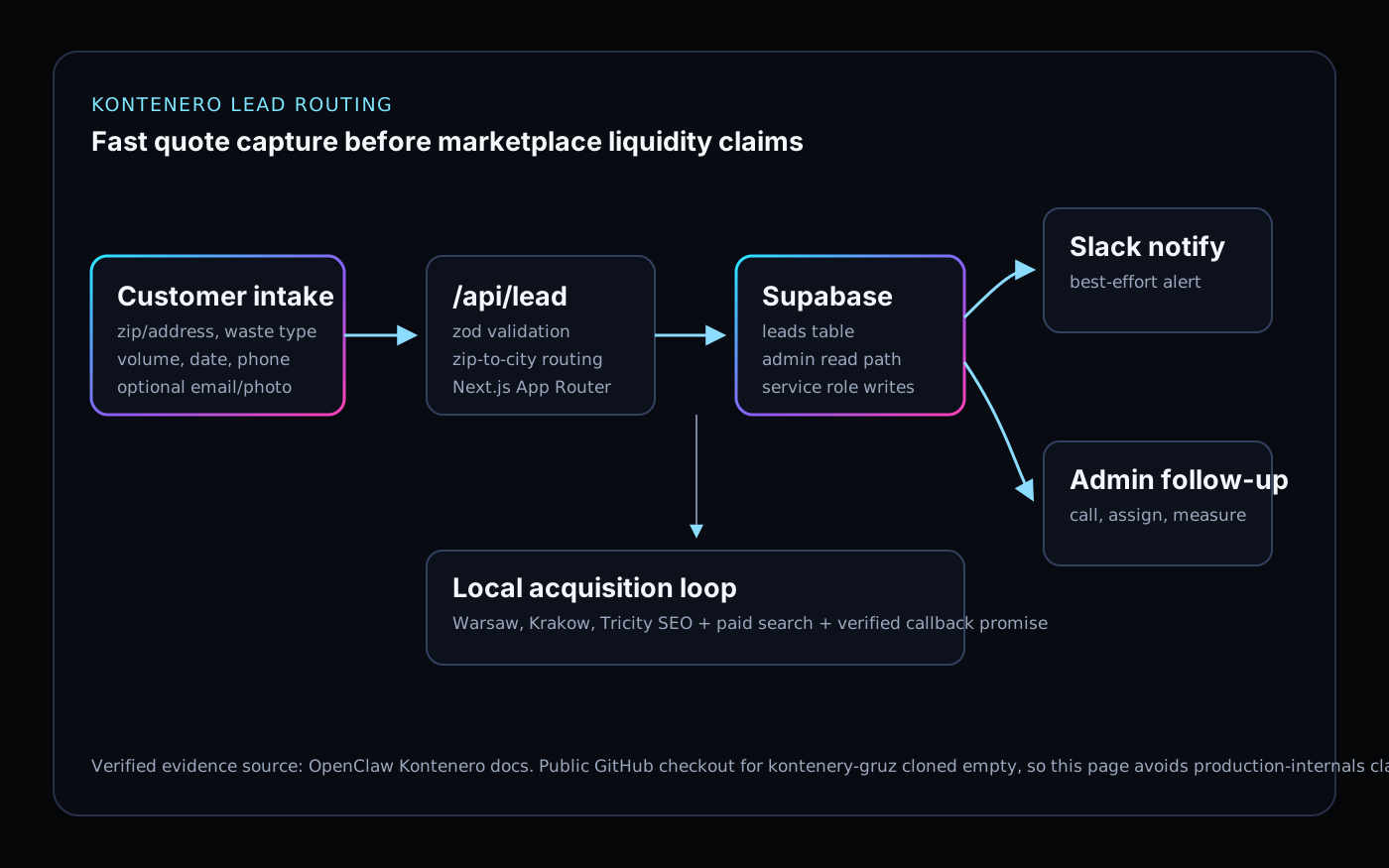
Kontenero is designed as an in-progress lead-generation marketplace, not a finished transaction platform. The verified product evidence describes a Next.js 15 App Router build where `/api/lead` validates intake with zod, derives the city from zip code, inserts the lead into Supabase, and sends a best-effort Slack notification.
The customer flow is intentionally narrow: zip/address, waste type, volume, phone, preferred date, optional email, and later optional photo. The goal is to reduce friction while giving operators enough context to respond quickly.
- MVP surfaces include landing page, `/api/lead`, thank-you page, and admin panel.
- Public promise and campaign planning focus on Warsaw, Krakow, and Tricity local intent.
- The case study keeps traction claims out until marketplace liquidity is proven.
Operator activation depends on verification, not just a listing page
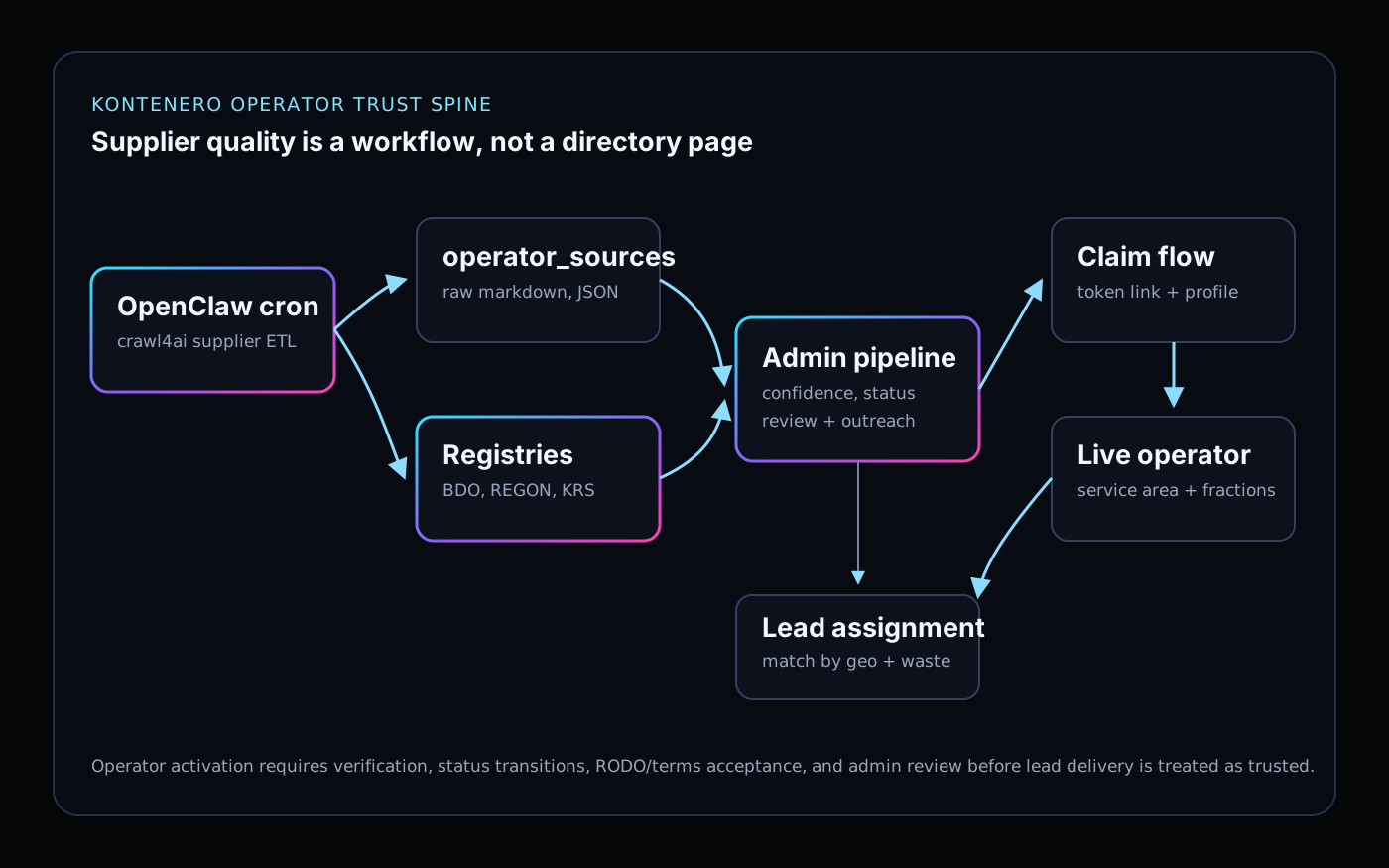
The operator architecture is the harder marketplace layer. Project specs describe supplier ETL, operator sources, outreach, admin pipeline, claim links, profile verification, RODO/terms acceptance, status transitions, and future wallet/lead assignment views.
Trust is modeled through external registries and operational state: BDO public registry, GUS BIR1/REGON, KRS/CEIDG, Rejestr.io fallback, accepted waste fractions, service area, capacity, pricing signals, and admin review before a supplier becomes live.
- Operator-source data includes source URL, raw markdown, extracted JSON, confidence, and status.
- Operator panel plans include login, claim, dashboard, profile, verification, and wallet routes.
- Heavy supplier ETL is planned outside the request path through OpenClaw cron/automation.
Start with a written process review.
Describe the process or system that needs to stop hurting. Within one business day you get a written process review: architecture risk, the delivery path, and where AI or automation helps without losing production control. Free, no call required. If it is worth building, the next step is an AI workflow pilot: a fixed-price, two-week build, quoted before kickoff.