
Access-control systems carry operational risk. A permission rule, card sequence, reader group, schedule, or RCP event can affect real buildings and real people.
That is why modernization has to start from the domain model. In HSK WebKD, the engineering work spans NestJS, React, Nx, PostgreSQL, Redis, E2E tests, Kubernetes local development, and documentation for the behaviors the system must preserve.
The point is not to replace everything at once. The point is to make change safer: clearer contracts, repeatable local environments, better test seams, and documentation that engineers can use while touching critical workflows.
The useful modernization question is not "which framework should replace the old system?" The useful question is "which part of the domain can we isolate, verify, and release without breaking operator trust?"
WebKD has a dense operational vocabulary: RCP servers, TKD controllers and readers, PKD cardholders, KAD access cards, groups, individual permissions, schedules, sequences, events, attendance records, reports, DOD views, and remote-work workflows. A redesign that ignores those names would be decorative. A modernization that respects them can make the system easier to change.
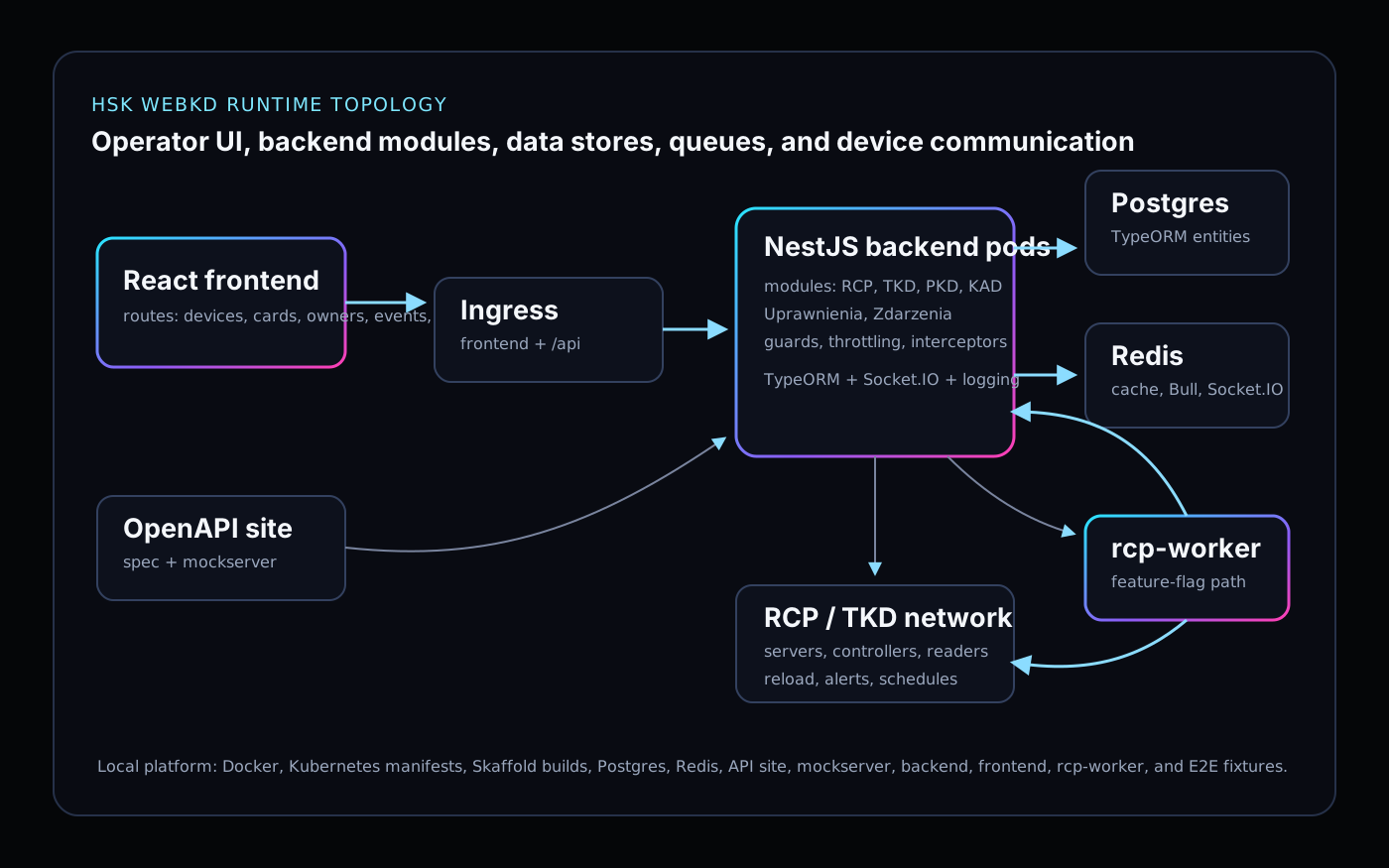
CloudFloo maps those concepts into modules, contracts, and release boundaries. Backend modules expose domain behavior through DTOs and API contracts. Frontend routes mirror operator tasks. Postgres, Redis, Bull queues, Socket.IO, and optional RCP worker paths make the runtime explicit instead of hidden in one process.
The local platform matters because enterprise work fails when developers cannot reproduce the topology. Skaffold, Docker, Kubernetes manifests, Postgres, Redis, mock/API-site images, and E2E fixtures give engineers a closer version of the system they are changing.
Release control matters for the same reason. A schema migration, API rollout, and frontend change must not land as an ambiguous half-upgraded state. Helm migration Jobs, init-container waits, probes, and cleanup scripts turn deployment into a sequence the team can inspect.
For CloudFloo, HSK WebKD is one of the projects we are most proud of because it rewards senior discipline. There is no shortcut through systems like this. You read the domain, keep the behavior intact, and improve the platform one reliable slice at a time.