
Localization is often treated as the last step: translate the page, add a language switcher, and call the work done. In B2B commerce, that is rarely enough.
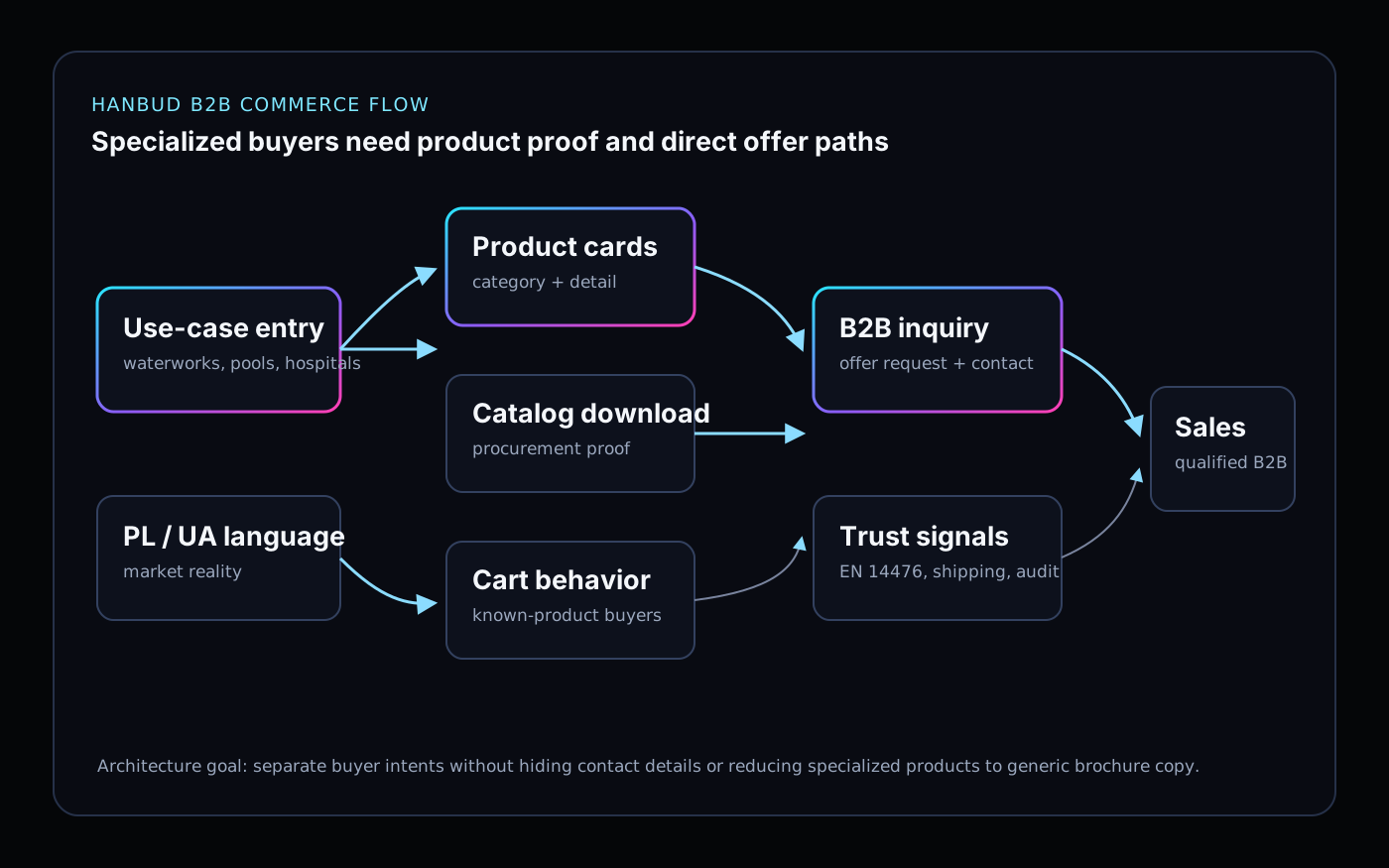
For Hanbud, Polish and Ukrainian content supports a real market context. Buyers need product categories, use cases, trust signals, catalog access, and contact paths that make sense in their language and procurement environment.
The key product question is not "is every sentence translated?" The key question is "can a buyer complete their job in this language?" That includes finding the right product, checking relevant signals, downloading material, asking for an offer, and contacting the supplier.
Localization should also influence information architecture. If one market needs stronger education, clearer certification copy, different contact emphasis, or more visible catalog access, the page should support that rather than forcing both languages into the same exact hierarchy.
B2B localization also affects SEO. Search intent differs by language and market. Polish and Ukrainian buyers may use different product names, category phrases, and procurement terms. A site that treats localization as product architecture can capture that intent more naturally.
For CloudFloo, the lesson is that multilingual websites need engineering and copy to work together. Routes, components, content models, metadata, and language-specific proof all shape whether the buyer journey feels native or patched on.
A language toggle is the visible part. The real localization work is the buyer path underneath it.