
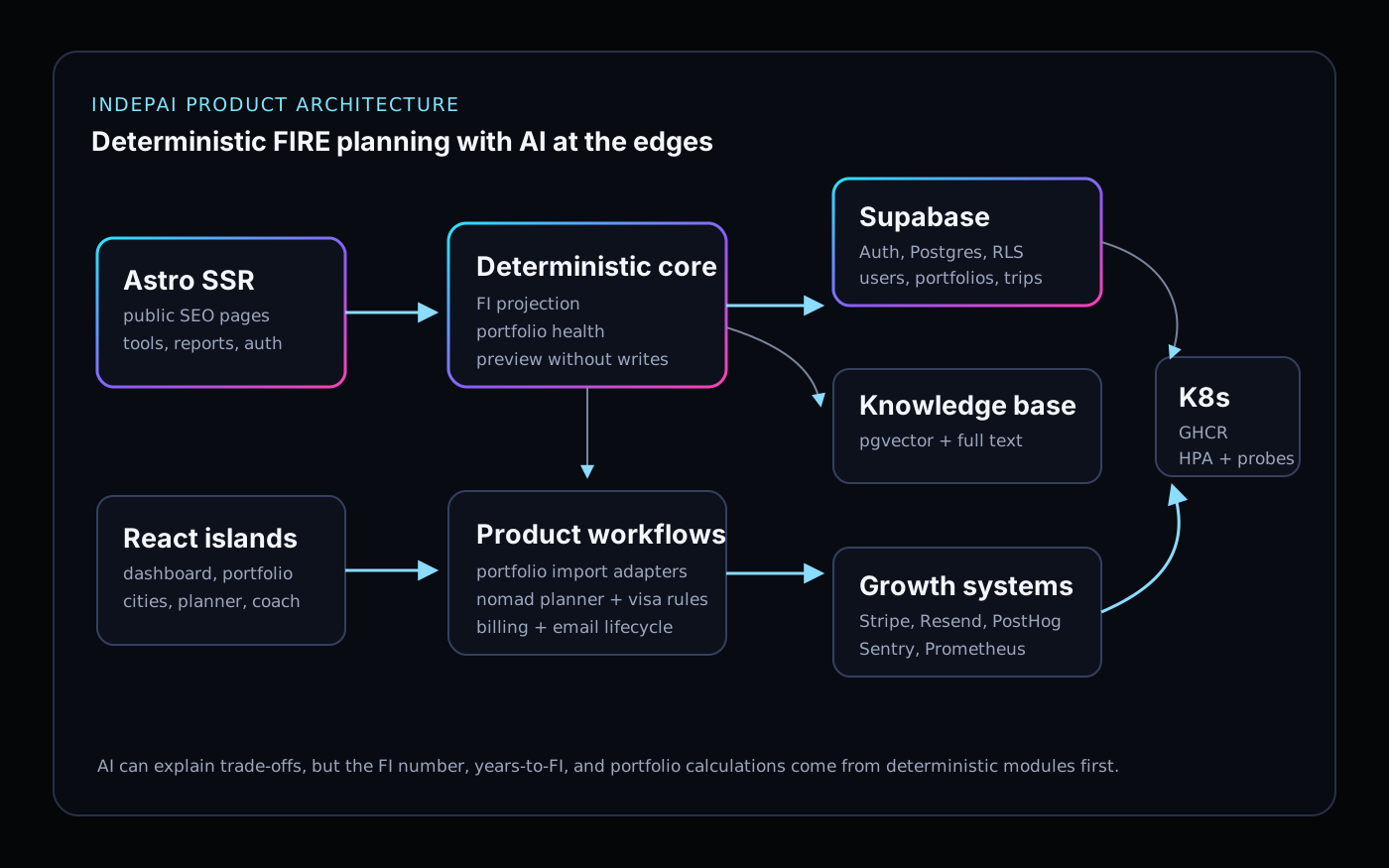
Supabase is a strong fit for many early AI SaaS products because it gives teams auth, Postgres, storage, edge functions, and row-level security without spending months on platform plumbing.
The privacy architecture still has to be designed. Vendor choice does not decide which data the model can read, which rows a user can access, how consent is stored, or what happens when a user asks for export or deletion.
IndepAI separates deterministic product data from AI explanation flows. User records, portfolio snapshots, city comparisons, planner state, and consent settings belong in the product data layer. AI should receive the minimum context needed for the job.
RLS is a useful foundation, but it is not the whole answer. Product code still has to avoid over-broad service roles, unnecessary prompt context, unstructured logging of sensitive fields, and tools that can write without explicit product intent.
Privacy-friendly AI SaaS architecture should also create an audit trail. The team should be able to answer which user triggered an AI flow, which tool ran, what category of data was used, what output was produced, and whether the action changed product state.
This is where product and backend architecture meet. A clear data model makes the AI context smaller. Smaller context is easier to explain, cheaper to run, and safer to review.
For buyers, the lesson is simple: ask your AI SaaS team where privacy is enforced. If the answer is only "the prompt," the system is not ready.